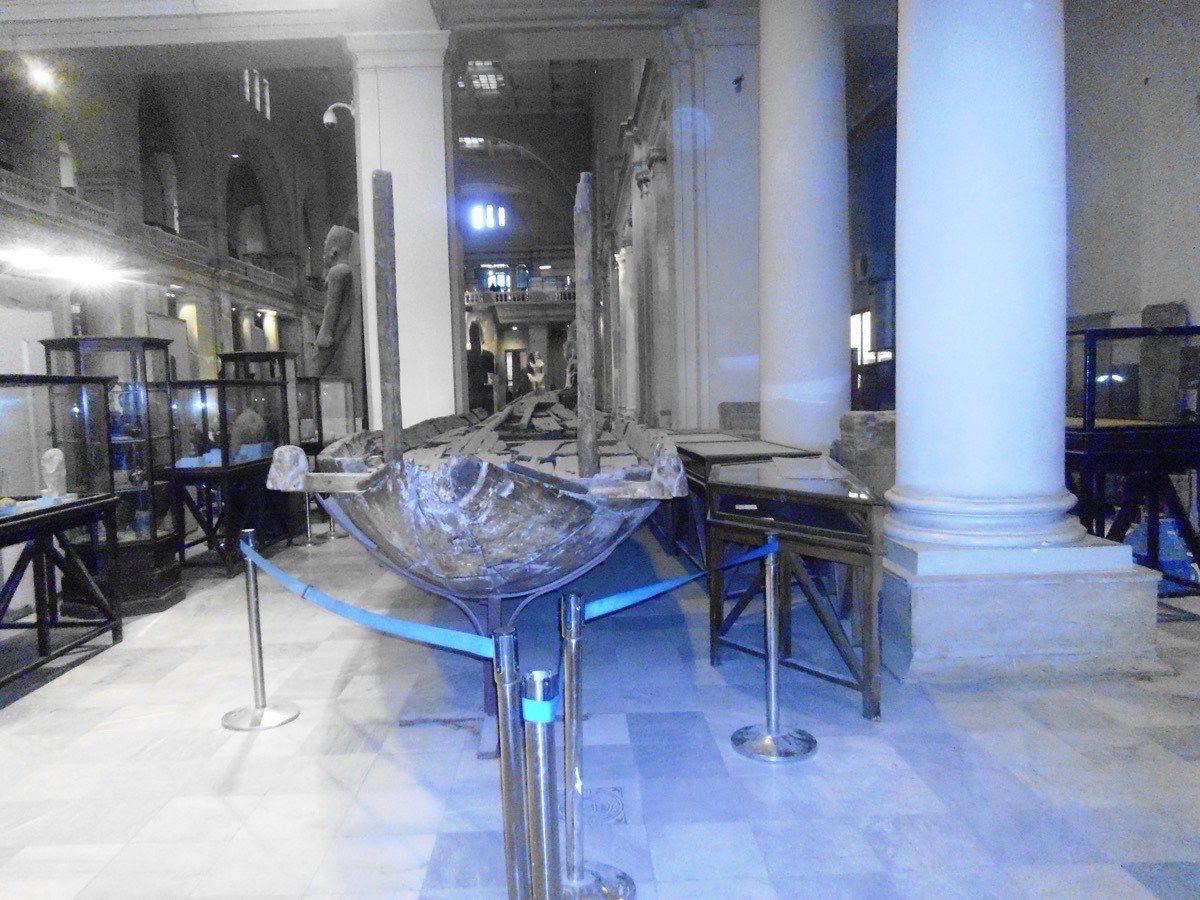
Egyptian Museum halls in Cairo, home to over 120,000 antiquities
Our story

Founded Out of Frustration

In 2009, Dr. Nour Abdel-Fattah and her colleague Rashid Mansouri were completing doctoral fieldwork at Abydos when they noticed a pattern: the visitors passing through were spending an average of four minutes inside the temple of Seti I — one of the finest surviving painted interiors in Egypt — and leaving with no clear impression of what they had seen.

They began producing one-page orientation notes and leaving them at the site entrance with the ticket inspector's permission. The response was immediate. Visitors returned the following day to look more carefully. Academic tour leaders asked where they could get the full version. Two field school directors requested permission to include the notes in their pre-trip packs.

By 2011, what had started as an informal side project had become a structured consultancy with clients from three continents. Today, Kemet Heritage Consultancy maintains a research library of over 340 detailed site documents, 28 museum guides, and a continuously updated access log for all major archaeological sites.
What we stand for

Three Principles We Don't Compromise On

Independence

We accept no commissions from hotels, transport operators, or admission resellers. Every assessment we publish is financially disinterested. When we say a particular museum gallery is excellent, it's because our researchers visited it and formed that view — not because the institution sponsored us. When something has deteriorated, we say so clearly and explain why.

Accuracy

Our documents are reviewed by at least two team members with relevant specialisations before publication. We cite our sources in an internal bibliography available on request to academic partners. When scholarly consensus on a topic is genuinely unsettled — as it is, for example, with the original colouring of the Giza monuments — we present the contested positions rather than selecting the most photogenic answer.

Accessibility

Academic rigour should not mean impenetrable prose. We work hard to write material that an interested first-time visitor to Egypt can read and act on, while still being substantive enough for someone with a postgraduate background in ancient history. We test every new document with both audiences before release. Simplified family versions are produced in parallel for most site guides.

The people

Meet the Research Team

Our core team of eight specialists is supported by a network of seventeen contributing researchers based across Egypt, Europe, and North America. The four people below lead our main research areas.

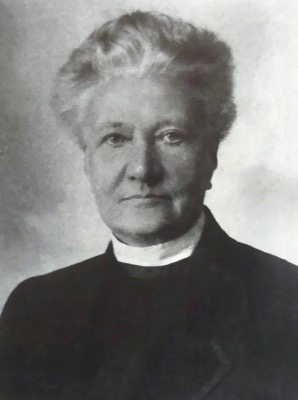
Portrait of Dr. Nour Abdel-Fattah, Director

Dr. Nour Abdel-Fattah

Director & Founder

PhD in Egyptology from the University of Oxford (2008), with a dissertation on New Kingdom royal funerary iconography. Nour has conducted fieldwork at Abydos, Amarna, and the West Bank of Luxor. She has published in the Journal of Egyptian Archaeology and served as a consultant to the Egyptian Ministry of Tourism during the Grand Egyptian Museum installation project.

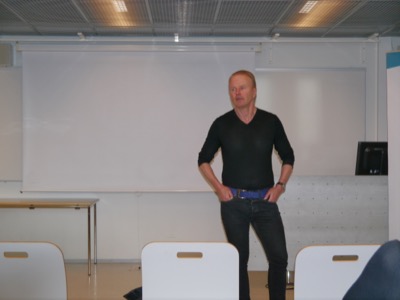
Portrait of Rashid Mansouri, Head of Field Research

Rashid Mansouri

Head of Field Research

MA in Classical Archaeology from Humboldt University Berlin, with fifteen years of fieldwork experience across the Eastern Mediterranean and the Nile Valley. Rashid specialises in Ptolemaic-period architecture and is the lead author of our temple of Edfu, Dendara, and Philae site guides. He speaks Arabic, German, English, and ancient Greek at reading level.

Portrait of Dr. Amira Hassan, Islamic Heritage Specialist

Dr. Amira Hassan

Islamic Heritage Specialist

PhD in Islamic Art History from Ain Shams University. Amira leads our content for Fatimid and Mamluk Cairo — the Khan el-Khalili district, the Mosque of Ibn Tulun, the Al-Hakim Mosque, and the Citadel. She was previously a researcher at the Museum of Islamic Art and has taught as a visiting lecturer at the American University in Cairo.

Portrait of Youssef El-Sayed, Visitor Experience Researcher

Youssef El-Sayed

Visitor Experience Researcher

BA in Cultural Heritage Management from Cairo University, with postgraduate training in museum studies from the Université Paris 1 Panthéon-Sorbonne. Youssef manages our access log, coordinates site updates, and leads the production of our family-format companion sheets. He visits each of our core sites at least twice annually to verify practical details.

Fifteen years of work

How We Got Here

2009

First site orientation notes produced informally at Abydos. Immediate uptake by visiting academic groups prompts Nour and Rashid to formalise the project as a registered consultancy in Cairo.

2011

Library expands to cover all major New Kingdom sites. First licensing agreement signed with a Basel-based cultural travel operator. Arabic-language versions of museum guides released.

2014

Dr. Amira Hassan joins as Islamic Heritage Specialist, extending coverage to Fatimid and Mamluk Cairo. German-language guides launched following demand from European academic groups.

2017

Partnership with Durham University Department of Archaeology for pre-field-school orientation programme. Comprehensive Saqqara briefing produced covering all accessible tomb complexes, updated each season.

2020–2021

Remote consultation service launched during travel restrictions. Online briefing sessions delivered to over 200 travellers preparing for future visits. Grand Egyptian Museum preview guides produced ahead of the phased opening.

2023

Grand Egyptian Museum opens its main galleries. Kemet releases the most comprehensive independent visitor guide for the GEM available in English, French, German, and Arabic. Youssef El-Sayed joins the core team.

2026

340+ site and museum documents in the library. 8,400 individual visitors and 190 academic groups served. Ongoing field research programme at Amarna, Tell el-Amarna, and the Delta region.

Academic partnerships

Who We Work With

Our documents are used by field schools, university departments, and heritage organisations. Institutions that have engaged Kemet Heritage Consultancy for group orientation or content licensing include the following.

University Field Schools

We provide pre-travel orientation packages for archaeological field schools, covering site-specific context, Egyptian antiquities law, photographic documentation protocols, and practical advice on working in an active excavation environment. Clients include field school programmes from the University of Basel, Durham University, and the Polish Centre of Mediterranean Archaeology in Warsaw.

Cultural Heritage Operators

Licensed operators may integrate our site and museum guides into their own client briefing packs with attribution. We work with approximately fourteen licensed tourism operators offering educational and heritage travel programmes to Egypt, including small-group specialists based in the United Kingdom, France, and Germany. All licensing includes an update clause — when we revise a guide, operators receive the new version.

Individual Research Commissions

Authors, documentary researchers, and heritage journalists commission us to produce background documents on specific topics: the current state of the Akhenaten collections across several Cairo institutions, a comparative analysis of tomb artists' working practices in Dynasties XVIII and XIX, or a practical briefing on accessing restricted excavation zones for credentialed press. These bespoke commissions are quoted individually.

How we work

Our Research and Publication Process

Every document we publish goes through a four-stage process before it reaches a client. Understanding this process explains why our material takes the form it does — and why it is more reliable than the average travel guide or generalist article about Egyptian heritage sites.

Stage One: Field Visit

Before any document is written or updated, at least one team member visits the site or institution in person. For major sites — Karnak, the Valley of the Kings, the Grand Egyptian Museum — this means a visit of six hours or more, walking every accessible route, checking current signage and interpretation, photographing any changes since the previous visit, and noting the practical details (crowd patterns, facility locations, access restrictions) that do not appear in scholarly publications. For smaller sites or those undergoing restoration, we coordinate with the site's official archaeologists or restoration team to obtain current access information that is not publicly published.

Stage Two: Literature Review

The field notes are combined with a literature review drawing on peer-reviewed publications in the Journal of Egyptian Archaeology, Göttinger Miszellen, the Journal of the American Research Center in Egypt, and relevant monographs. Where there is active scholarly debate — the original colouring of the Giza monuments, the attribution of certain Amarna-period objects, the interpretation of specific astronomical alignments — we identify the positions and the evidence for each rather than selecting the most convenient answer. Our internal bibliographies are available on request to academic clients and partner institutions.

Stage Three: Peer Review

Every document is reviewed by at least two team members with relevant specialisations before publication or client delivery. A site guide for an Old Kingdom monument is reviewed by someone with Old Kingdom expertise and by our visitor experience researcher, who assesses the document's practical utility. A museum guide for an Islamic art collection is reviewed by Dr. Amira Hassan before any text describing Fatimid or Mamluk attribution is finalised. This internal review catches factual errors, outdated information, and interpretive overclaiming before the document leaves our hands.

Stage Four: Update Cycle

Published documents are not static. Each document in our library has a scheduled review date — monthly for major sites with frequent access changes (Valley of the Kings, GEM), quarterly for secondary sites, annually for stable monuments. Whenever a significant change occurs — a new gallery opens, a tomb is closed for restoration, a major artefact is relocated — we trigger an immediate update regardless of the scheduled cycle. Clients who have received a document within sixty days of a significant revision receive the updated version without additional charge. This commitment to currency is what distinguishes our material from standard published guidebooks, which may be two to five years out of date on access conditions by the time a visitor holds them.

Travelling to Egypt? Let's Talk.

Tell us your dates and your interests and we'll match you with the guides and briefings most relevant to what you want to see. There's no obligation and no hard sell — just a clear proposal.

Reach the team